
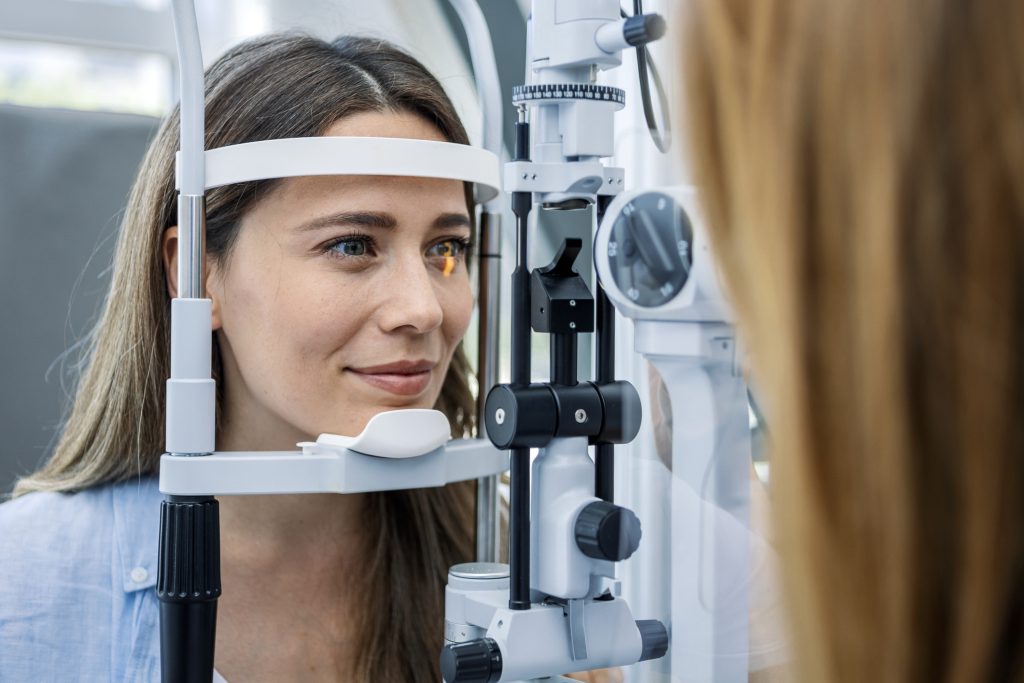
LASIK vs SMILE vs PRK is a common comparison for people considering permanent vision correction surgery. Vision correction surgery reshapes the cornea, the clear front surface of the eye. This subsequently improves the eyes’ ability to focus and reduces the reliance on contacts and glasses. Thanks to new technologies like LASIK, SMILE, and PRK, surgeries to correct eyesight have become commonplace.
Differentiating and Comparing LASIK, PRK, and SMILE
LASIK has been around since the early 1990s and has been a success in helping patients go through the procedure. With the procedure, a surgeon uses a laser and a blade to create and lift a thin flap in the cornea, reshape the cornea tissue underneath, and then place the flap back on. This process of reshaping the cornea is done with a laser, which makes it a non-invasive procedure.
With LASIK, patients get a fast recovery of their eyesight. After just a day or two, LASIK patients report improved vision. There is not much discomfort after the procedure, and the surgery can also be used to treat myopia, hyperopia, and astigmatism.
Disadvantages of LASIK:
- Not everyone can get the procedure, including those with thinner corneas.
- Although rare, there may be complications related to the surgical flap.
PRK (Photorefractive Keratectomy)
PRK is the most senior technique wherein the top epithelial layer (the first layer of the cornea) is removed and reshaped with a laser. Since there is no flap, it’s a good technique for patients whose corneas are too thin and wouldn’t qualify for LASIK.
Benefits of PRK:
- Flap removal and the complication of having a flap removed are addressed.
- Thin/irregular corneas are good candidates.
Downsides of PRK:
- The recovery time is a lot longer, and there are weeks during which the eyes are in a stabilizing period.
- Patients may experience more discomfort than after LASIK.
SMILE (Small Incision Lenticule Extraction)
The most recent procedure is SMILE. In contrast to LASIK and PRK, SMILE involves making a small incision in the cornea and using a single femtosecond laser to remove a small piece of corneal tissue (lenticule). The vision is improved, and the cornea is reshaped with no flap.
Advantages of SMILE:
- Some of the surgery involves laser flaps and are therefore minimally invasive.
- Less chance of complications arising from flaps, and there are no flap challenges.
- Patients usually have a faster recovery, on average, than those who undergo PRK, but a little slower than those who have LASIK.
Disadvantages of SMILE:
It mainly works with myopia and astigmatism, but those challenges have been rapidly improving during recent times.
LASIK vs PRK: Direct Comparison
The major differentiators between LASIK and PRK are recovery time and surgical technique. LASIK allows for quicker visual recovery due to the corneal flap, allowing for quicker healing. PRK, on the other hand, is longer healing as the epithelium is removed and takes several days to regrow, and since there is no flap, the healing is longer.
The long-term outcomes for each procedure are excellent, and the success rates for improved vision are similar, though PRK may be more beneficial for patients with a higher risk for eye trauma, as well as those with thinner corneas.
LASIK vs SMILE: What to Know
The primary difference between using LASIK vs SMILE is how the cornea is accessed. In LASIK, a corneal flap is created, while in SMILE, no flap is made, using a small incision instead. This difference in technique results in less nerve disruption and a lower risk of postoperative dry eye in SMILE.
LASIK recovery is also typically quicker, with recovery times of one to two days, while SMILE recovery may take a few days longer, though recovery time is still quicker than PRK.
SMILE vs PRK: Pros and Cons
In the comparison between SMILE and PRK, the comfort and recovery experience with SMILE is quicker and more pleasant. PRK causes more postoperative discomfort as visual recovery takes longer due to the longer recovery time than SMILE, even though no flap is created, like in SMILE.
If someone has an active lifestyle or is at greater risk for eye injury (e.g., athletes), then both SMILE and PRK are great options as neither creates a flap.
Finalizing the Best Procedure
Choosing SMILE, PRK, or LASIK has multiple factors to consider
- Corneal Thickness: PRK and SMILE are considered better options if the corneas are on the thinner side.
- Lifestyle and Activities: High-impact sports benefit from PRK or SMILE because of their flapless techniques.
- Recovery Speed: LASIK boasts the fastest recovery timeline, perfect for those with busy schedules.
- Prescription: SMILE is specifically designed to treat myopia and astigmatism.
Conclusion
Comparing LASIK vs PRK, SMILE vs PRK, and LASIK vs SMILE will help you choose the most suitable option for your vision correction surgery. Although all three are aimed at reducing your need for glasses and contact lenses, they are performed in different ways and have different recovery times, different levels of discomfort, and different patients for whom each might be recommended. An eye care consultation confirms you are a suitable candidate, and also helps design your vision correction.