
Laser Treatment: There are many types of laser procedures, which may be carried out for treatment of glaucoma.
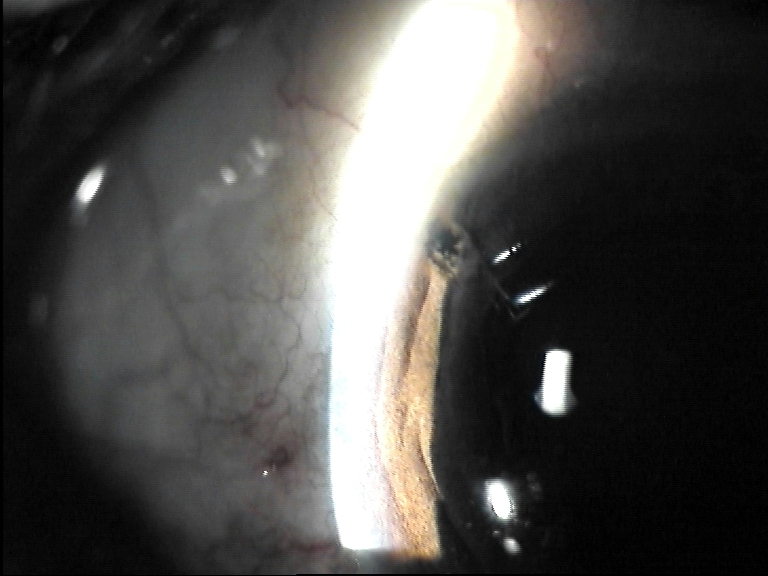
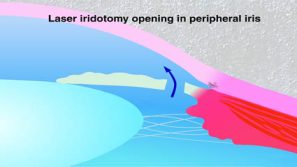
1. Laser Iridotomy: This procedure is helpful in certain cases of narrow angle glaucoma. A small opening is made in the iris using the Nd: YAG Laser. This enables easier circulation of aqueous humour within the eye. As described above, angle closure involved the lens coming too close to the iris and blocking the passage of fluid into the front of the eye, where it drains into the circulation. Relief of the relative pupillary block allows the iris to move back and the anterior chamber drainage angle to open, allowing escape of aqueous humor and lowering of the intraocular pressure. This is now commonly and simply done by making a small hole in the iris with laser (laser iridotomy), which provides another route for fluid to enter the front of the eye. This equalizes the pressure between the posterior and anterior chambers and allows the iris to fall back to its normal anatomic position and away from the trabecular surface. As the procedure is simple and doesn’t have significant side effects, it may also be done as a preventive measure in patients having narrow angles but have not developed glaucoma.
2. Laser Iridoplasty: In some cases of narrow angle glaucoma, the iris is bunched up
near the angle of the eye and increases narrow angles. The Argon Laser can be used to reduce this bunching and cause angle re-opening.
3. Selective Laser Trabeculoplasty: This procedure is useful in patients with primary open angle glaucoma. This laser selectively modifies trabecular meshwork (drainage area) to increase drainage of eye fluid and decrease intra ocular pressure. The treatment however has a tendency to loose its beneficial effect over time.
Laser trabeculoplasty is performed in your doctor’s office or eye clinic. Before the surgery, numbing drops will be applied to your eye. As you sit facing the laser machine, your doctor will hold a special lens to your eye. A high-intensity beam of light is aimed at the lens and reflected onto the meshwork inside your eye. You may see flashes of bright green or red light. The laser makes several evenly spaced burns that stretch the drainage holes in the meshwork. This allows the fluid to drain better.
Like any surgery, laser surgery can cause side effects, such as inflammation. Your doctor may give you some drops to take home for any soreness or inflammation inside the eye. You need to make several follow-up visits to have your eye pressure monitored.