
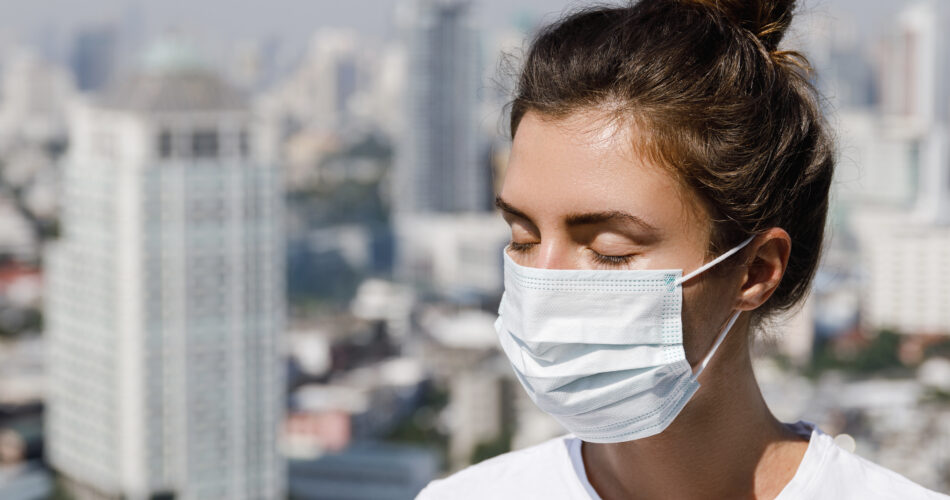
Eye irritation due to pollution is becoming a major concern for people living in urban environments. Constant exposure to dust, smoke, chemicals, and polluted air can damage the eyes, leading to dryness, redness, allergies, and long-term eye problems.
Millions of people experience eye discomfort daily without realizing that pollution is one of the biggest causes. Understanding how pollution affects eye health can help you take preventive measures and protect your vision from long-term damage.
How Air Pollution Affects Your Eyes
The eye is a sensitive organ. The surface of the eyes is exposed to the environment. Unlike the lungs, which filter air through breathing, your eyes receive no filter. Air pollutants such as PM2.5, nitrogen dioxide, ozone, and volatile organic compounds can land on your cornea and conjunctiva.
For urban populations, eye irritation caused by air pollution is a daily experience. These pollutants damage the protective tear film on the surface of the eyes. Continuous exposure to pollutants further weakens the eyes’ natural defenses, making them more vulnerable to severe and chronic conditions.
Pollution and Dry Eye Causes
Certain pollutants (such as ozone and particulate matter) disrupt the lipid layer of the tear film, which is the oily outer layer of the tear film that slows the evaporation of tears. If the lipid layer of the tear film breaks down, then the tears will evaporate far too quickly, making the surface of the eye dry and susceptible to damage. The damage to the eye’s surface is the cause of many of the numerous symptoms, including stinging, redness, and blurred vision, among many others, including an unquenchable desire to rub the eyes.
There are many other reasons that dry eye causes are associated with urbanization, including:
- The air in indoor spaces, especially in offices and homes, is often contaminated by cooking, cleaning activities, and air conditioning.
- Climate-controlled spaces, like offices or trains, often have too little humidity (i.e., dry air).
- Construction dust is always present in many fast-developing Indian cities.
Symptoms of Eye Irritation Due to Pollution
The residents of most cities often neglect to give eye irritation the attention that it needs, and instead brush it off as part of being tired or having an allergy. However, eye irritation due to pollution almost always has a distinct pattern. Most city residents are only truly aware of how much pollution there is on most days and are also aware of how much traffic there is, especially after having spent some time outdoors during a smog alert.
Often, symptoms of eye irritation include:
- Persistent redness that won’t go away, even after enough rest.
- Eyes that are watery with a sticky discharge.
- Swollen, puffy eyelids.
- Increased irritability, especially in relation to light or brightness.
- A burning sensation caused by dryness that leaves a gritty feeling and worsens as the day progresses.
Effective Eye Allergy Treatment for Pollution
When pollution causes symptoms of eye allergies, such as the eyes being itchy, swollen, and watery, it causes a lot of irritation. It becomes even more irritable if there is no effective Eye allergy treatment that can offer a lot of relief. Allergic conjunctivitis, which is one of the many pollution-related eye conditions, is especially sensitive to the
- Antihistamine eye drops: Block histamines causing itching and redness. OTCs may help mild cases. For more serious cases, see your ophthalmologist.
- Artificial tears (lubricating eye drops) remove debris from the surface of the eye and add moisture. The preservative-free formulations are best for frequent use.
- Mast cell stabilizers: Help with allergy-triggered chemicals and are useful for seasonal exacerbation related to pollution.
- Cold compresses: Work best for reducing swollen eyelids and for short-term relief of irritation.
How to Protect Your Eyes From Urban Pollution
You can’t control the air quality, but you can control how much air reaches your eyes. The following measures can help:
- Wear wraparound sunglasses outdoors: These block UV rays and help reduce pollution exacerbation.
- Prior to outdoor activity, check the Air Quality Index (AQI): If pollution is dangerous, limit time outdoors and keep windows closed.
- After being indoors, rinse your eyes: This reduces the surface pollutants that prolong irritation.
- Use humidifiers indoors: Pollution combined with dry air can enhance irritation.
- Get annual eye exams: Look for changes in your tear fluid and eye allergies to help reduce damage.
Final Thoughts on Eye Irritation Due to Pollution
Living in an urban environment physically damages your eyes in a subtle but clear way that is hard to miss. Dry eyes, irritation, and allergic responses due to exposure to pollutants, and the need for treatment, are not niche issues. They affect millions of people in the urban environment on a daily basis.
The benefits of knowing the problem and having the right attitudes are that you can protect your eyesight. Wear protective eyewear, keep up with your eye exams, treat eye allergies as soon as possible, and treat your eyes as the precision instruments they are. Your city may not clean up its air anytime soon, but you can control the damage to your eyes as best as you can.