
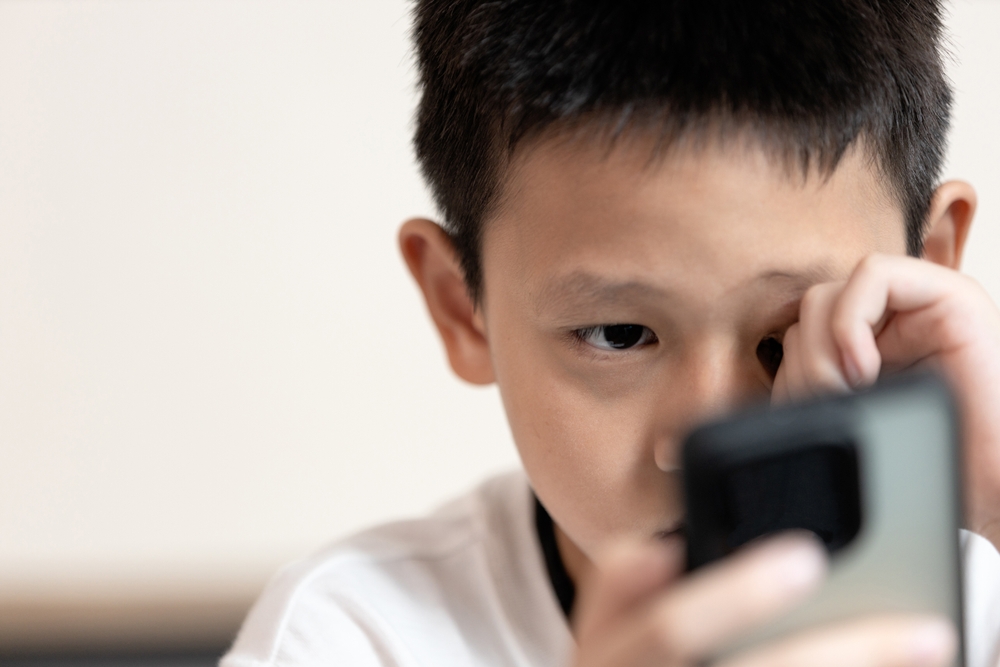
It’s nighttime, and you’re browsing your phone in the dark. Suddenly, someone warns you not to strain your eyes again. You’ve heard it countless times before. While annoying, is there any truth to this claim? The answer is complicated. Staring at your phone in the dark may not result in any permanent damage to your eyesight, but it may result in other discomforting symptoms that may put you at risk for more severe issues in the future, such as glaucoma.
What Happens During Phone Use in the Dark?
There is a stark contrast between the bright screen and the dark background. To take in the surrounding light, your pupils dilate in the dark, but this will cause your eyes to work harder. The screen brightens, the light around you darkens, and you are left with a strenuous imbalance. This condition, according to ocular specialists, is called digital eye strain.
The American Academy of Ophthalmology states that digital eye strain can result in a variety of symptoms. These include dry eyes, headaches, and blurred vision. Generally, symptoms may be irritating in the short term, but with increased exposure, they may become chronic.
Does Phone Use in the Dark Damage Your Eyes Permanently? Studies haven’t found that using a phone in the dark causes vision loss, but experts are worried about the high-energy blue light that smartphone screens give off. Blue light can go deep into the eye, and it may hurt retinal cells over time.
NIH published studies of blue light and found that it is a factor in the development of oxidative stress in the retina. It may not directly lead to blindness, but it is expected to worsen the progression of macular degeneration and lead to increased risk for those who have eye disorders.
Phone Use in the Dark and Its Connection to Glaucoma
Too much time spent on screens can raise eye pressure and the risk of glaucoma. If left untreated, glaucoma can damage the optic nerve and cause permanent vision loss.
Research at Harvard Medical School indicates that blue light decreases melatonin and causes poor sleep. Eye care providers have identified the combination of poor sleep and increased screen time as a risk factor for developing glaucoma.
If you experience persistent headaches or even blurred vision, and especially halos around lights, you need to get a glaucoma specialist appointment as soon as possible. Measuring the pressure in the eye, health of the optic nerve, and peripheral vision are all part of the glaucoma workup. The earlier you get a glaucoma workup, the better you can improve your treatment options and preserve your vision.
What You Should Know About Glaucoma Treatment in Mumbai
India has one of the world’s highest glaucoma burdens. Millions of Indian people are walking around with this disease and have no idea about their diagnosis. If you are in Maharashtra and are worried about your vision, you can easily find and book an appointment with a specialist for glaucoma Treatment in Mumbai.
In Mumbai, contemporary glaucoma therapies involve the use of medicated eye drops to control intraocular pressure, laser techniques such as selective laser trabeculoplasty (SLT), and minimally invasive glaucoma surgeries (MIGS). Mumbai has internationally recognized eye hospitals that offer state-of-the-art diagnostic and surgical services. If you want to preserve your eyesight for as long as possible, seeking glaucoma treatment in Mumbai at the earliest will give you the best option.
Tips for Better Eye Care During Evening Activities
Change is never easy, but for your vision, these adjustments may not feel like sacrificing anything:
- Night Owl Mode: Consider modding your screen to avoid that eye-numbing blue light.
- Lighting Adjustments: Some ambient light behind you is contrast depth, and it is better for your eyes and vision.
- Screen Light Reduction: Manually lower your screen light. This will help lessen your blue light exposure.
- Screen Time Curfew: Set a screen-free rule 30 minutes before sleep. This helps your eyes naturally recover.
- Regular Check Ups: This is even more important if you have a history of eye issues. A glaucoma test at 40 should be yearly.
Conclusion
Your smartphone’s blue light certainly won’t cause instant vision destruction, but it is damaging. The combination of digital eye strain and disrupted sleep does temporary damage to your eye health. Supplementing with a protective glaucoma diet, regular checks with the addition of a glaucoma test, and the glaucoma surgeries Mumbai has to offer are proactive and smart measures. This is especially true considering your eyes are your hardest-working feature.